The Strategic Power of Play: Using the Boy Block Playing Game in Kindergarten as a Framework for Growth
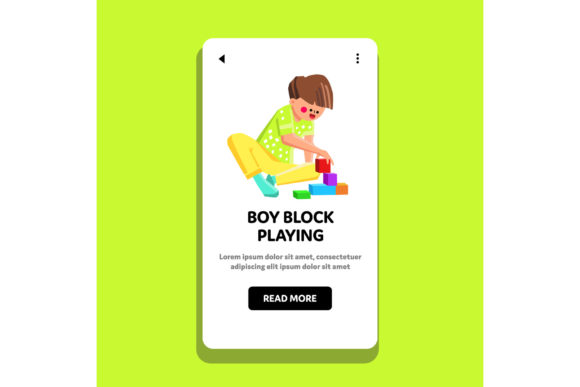
When we observe a child engrossed in a boy block playing game in kindergarten, we often see simple joy and motor skill development. Yet, this seemingly rudimentary activity contains a sophisticated, repeatable system for building, testing, and innovating. For entrepreneurs, creators, and professionals, it represents more than a nostalgic image; it is a metaphorical framework for achieving structured, iterative results.
Deconstructing the Boy Block Playing Game in Kindergarten: A System for Creation
The core elements of the boy block playing game in kindergarten are universal: a finite set of modular components (blocks), an open environment (the floor), a goal (often unspoken but understood—to create a structure), and a process of trial, error, and revision. This is not random play. It is a deliberate, hands-on exploration of possibilities within constraints. Strategically, this mirrors how we approach projects, campaigns, or product development. We have resources (blocks), a market or canvas (the kindergarten floor), and a vision we assemble piece by piece. Understanding this system allows us to move from chaotic effort to intentional construction.
Why This Metaphor Supports Clear Goals and Planning
Before the child begins, there is an implicit goal. Perhaps it’s a tower, a bridge, or a house. The activity’s value diminishes if the goal is utterly absent. Translating this, your use of any tool or framework—whether a business model, a content strategy, or a new software—requires the same clarity. The boy block playing game in kindergarten teaches us that planning begins with a simple, visualizable outcome. This forces specificity. Are you building brand awareness (a wide, stable base) or launching a niche product (a tall, precise tower)? The blocks are your actions, your content, your features. How you combine them determines stability and height.
Consider practical examples. A marketer planning a campaign can think in "blocks": foundational research blocks, content creation blocks, distribution channel blocks, measurement blocks. The order of assembly matters. Placing the "distribution" block before the "content" block leads to collapse. A freelance creator might see each project as a new structure, learning which block sequences (client communication, draft delivery, revision cycles) yield the most robust and satisfying final product.
Intentional Use: Moving Beyond Random Assembly
To leverage the principles of the boy block playing game in kindergarten effectively, you must approach your work with the same mindful experimentation. It is not about haphazardly tossing elements together. It’s about thoughtful placement, observing what works, and reinforcing weak points. This requires a feedback loop akin to the child looking at his construction, noticing imbalance, and adding support.
- Start with a Blueprint, Even a Simple One: Sketch the rough shape of your outcome. In operations, this could be a process flow. In branding, it could be a mood board.
- Assemble in Stages: Build the foundation first. For a new service, this is core functionality or key messaging before advanced features or ancillary content.
- Test Stability at Each Phase: Before adding more "blocks" (complexity, investment, scale), check if the current structure holds. Is your basic product viable? Does your initial blog post resonate?
- Be Ready to Deconstruct and Rebuild: If a section collapses, the child doesn’t abandon the game. He learns from the failure and rebuilds, often with a better design. Strategic iteration is your rebuild phase.
Risks of Using the Framework Without Context
The danger lies in adopting the activity’s form without its strategic substance. Using the boy block playing game in kindergarten as a metaphor without clear goals leads to resource consumption without direction. You simply "play" with tools, tactics, or ideas, enjoying the process but creating nothing of lasting value. Another risk is ignoring environmental constraints. The kindergarten floor has limits—space, time, other children. Your market has constraints: budget, competition, audience attention. Building a magnificent, intricate structure that no one sees or that cannot be maintained is the professional equivalent of a block castle left unused at the end of the day.
Furthermore, over-reliance on a single type of "block" creates fragility. If your entire strategy is built only on social media blocks (one shape, one color), it becomes vulnerable to platform changes. Diversify your components as the child uses different block shapes for different functions: pillars, arches, flat planes.
Applications in Communication, Creativity, and Customer Experience
The principles extend beyond project planning. In communication, each message is a block. A coherent narrative is a carefully assembled structure. Random, disjointed messages collapse understanding. In fostering creativity, the game teaches that innovation happens within limits. The finite block set sparks ingenuity—how can I build something new with these same pieces? This is directly applicable to problem-solving with limited budgets or existing resources.
For customer experience, the entire journey is a structure you build for the user. Each touchpoint—website visit, purchase process, support interaction—is a block. Their cumulative experience depends on how seamlessly and sturdily these blocks fit together. A gap or an unstable block (a confusing step, a delayed response) can cause the entire experience to tumble, damaging trust.
Long-Term Value and Strategic Observations
The long-term value of internalizing this framework is a mindset of constructive iteration. Every outcome is a prototype. Some structures are meant to be temporary (a campaign), others permanent (a brand identity). The key is knowing which you are building and applying appropriate materials and effort. A temporary structure can use lighter, quicker blocks; a permanent one requires deep foundations and quality materials.
- Observe Patterns in Your Successes and Failures: Which block sequences consistently work? Which lead to collapse? This is your proprietary building knowledge.
- Curate Your Block Set: Continuously improve and diversify your toolkit—your skills, your software, your network.
- Respect the Play Environment: Market conditions, team dynamics, and technological shifts are your "floor." Adapt your building style to them.
Ultimately, the boy block playing game in kindergarten is a lesson in grounded creation. It reminds us that great outcomes are built, not wished for. They require a hands-on approach, a tolerance for minor collapses, and the vision to see a final structure from scattered pieces. By applying this disciplined play to your professional endeavors, you move from reactive task completion to the strategic architect of your own results. Whether you are building a business, a creative portfolio, or a learning path, start with your blocks, define your floor, and begin constructing with intention. The final structure, much like the child’s satisfied smile, will be its own reward.