The Pixel Art Landscape: From Nostalgic Revival to Modern Design Asset
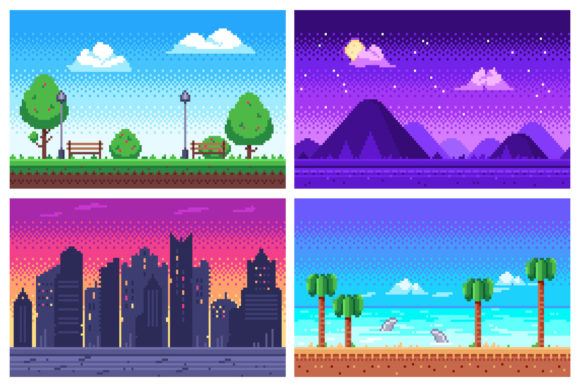
The resurgence of pixel art is more than a fleeting trend; it's a deliberate aesthetic choice with deep roots in both nostalgia and contemporary digital minimalism. When we speak of a Pixel Art Landscape, we refer not just to a singular image, but to a comprehensive, scalable environment crafted from this distinct visual language. Think of a summer ocean beach with waves reduced to rhythmic blocks of cyan, an 8-bit city park where each tree is a charming cluster of pixels, or a sprawling pixel cityscape against a dusk sky. These scenes, often bundled as a pixelated scene gaming playing level vector background set, represent a fusion of artistic style and practical utility, offering creators a versatile toolkit for projects ranging from indie games to branding materials.
Defining the Pixel Art Landscape in a Vector World
A Pixel Art Landscape is a meticulously designed environment or scene constructed using the deliberate placement of colored pixels, often evoking the visual style of early computer and arcade games. Unlike traditional raster-based pixel art, modern iterations are frequently created and distributed as vector files, such as the commonly offered EPS10 format. This vector foundation is crucial. It means the artwork, whether depicting highlands landscapes or an arcade game alley, is composed of mathematical paths and points rather than fixed pixels. This allows for infinite scalability without loss of quality, seamless editing in applications like Adobe Illustrator, and effortless integration into diverse workflows. The accompanying JPEG 72ppi preview serves as a quick visual reference, while the vector file is the true, editable asset.
Why Vector Pixel Art Matters for Professionals
The shift from static pixel sprites to editable vector landscapes marks a significant evolution. For the professional designer or marketer, this transforms pixel art from a locked-in aesthetic into a flexible component. You can isolate a character from the summer ocean beach, change the color palette of the 8-bit city park to match a brand, or rearrange buildings in the pixel cityscape to create a unique composition. This adaptability aligns perfectly with modern creative needs, where assets must be reusable, customizable, and platform-agnostic. The ability to "separate elements, remove or edit something" using a vector editor turns a single purchased asset into a library of possibilities, maximizing return on investment for freelancers and studios alike.
The Broader Context: Pixel Art in Today's Creative and Tech Ecosystems
The popularity of pixel art landscapes is not an isolated phenomenon. It intersects with several enduring trends across industries.
- Creative Nostalgia & Modern Minimalism: In design and marketing, there's a powerful blend of nostalgic appeal and a desire for clean, simplified visuals. Pixel art delivers both, evoking warmth and familiarity while adhering to principles of geometric reduction.
- Indie Game Development Boom: The explosive growth of independent game development has created a vast market for high-quality, ready-to-use assets. A well-crafted pixel art landscape set accelerates production, allowing small teams to focus on gameplay and story.
- Branding and Digital Identity: Beyond games, pixel art is employed in app interfaces, website elements, and social media campaigns to convey a sense of playfulness, retro-tech, or straightforward honesty. It stands out in a crowded digital space.
- The Vector Standard: The industry's widespread reliance on vector graphics for logos, illustrations, and UI design makes vector-based pixel art a logical and compatible addition to any professional's asset library.
Changing Needs and Workflows Driving Relevance
The demand for such assets reflects fundamental shifts in how creators work and what audiences expect.
- Speed and Efficiency: In fast-paced environments, professionals cannot spend hours crafting every background. Pre-made, editable Pixel Art Landscape sets offer a foundational starting point that can be tailored quickly.
- Cross-Platform Consistency: Assets must look sharp on a mobile screen, a desktop monitor, and a printed poster. Vector pixel art ensures this consistency across all mediums and resolutions.
- Audience Engagement: Modern consumers, particularly in digital spaces, are drawn to distinctive visual styles that tell a story. A cohesive pixel art environment can create immediate atmosphere and narrative context, enhancing user experience.
- The DIY Creator Economy: With more entrepreneurs and freelancers building digital products, there's a growing need for professional-grade assets that are accessible and easy to manipulate without deep artistic expertise.
Practical Applications and Observations
Consider a mobile game developer using a summer ocean beach scene as a relaxing level backdrop. By editing the vector file, they can easily add custom treasure chests or change the sky to sunset for a different mood. A graphic designer might extract the lanterns from an 8-bit city park to use as icons for a community festival website. A content creator could employ elements from a highlands landscapes pack as recurring visual motifs in a series of retro-tech explainer videos. In each case, the vector Pixel Art Landscape acts not as a finished, immutable picture, but as a dynamic resource that adapts to the project's specific requirements.
Connecting to Larger Developments: A Forward-Looking Asset
The trajectory of digital art and design is moving towards greater flexibility, modularity, and stylistic hybridization. Pixel art, once confined to the screens of the past, has been liberated by vector technology. It now coexists and blends with other styles in modern design projects. This evolution mirrors larger developments in software—where interoperability and non-destructive editing are paramount—and in content creation, where remixing and customization are standard practices. As such, a high-quality pixel art landscape set is more than a nostalgic tribute; it is a forward-looking design component that acknowledges the past while fully embracing the present's tools and demands. It provides a bridge between evocative aesthetic appeal and the practical, editable needs of today's professionals, creators, and entrepreneurs, ensuring its place remains relevant in the ever-evolving digital landscape.