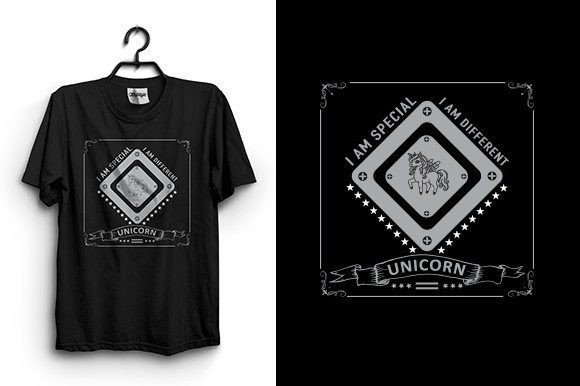
The Unicorn T-Shirt Design: A Foundation for Creative Projects
Hello and welcome to my creative t-shirt design store. At the heart of many successful apparel projects is a single, powerful design asset. This is my Unicorn T-Shirt Design—a versatile vector graphic built to be the starting point for your merchandise, branding, or personal creations. For creators, entrepreneurs, and hobbyists looking for quality, it represents more than just an image; it’s a flexible tool that maintains its integrity no matter how you change it. Understanding what makes a design like this genuinely useful, however, is key to avoiding common pitfalls that can undermine your entire project.
Beyond the Image: What a True Vector Design Offers
Many are drawn to the whimsical, bold aesthetic of a unicorn design for its market appeal and symbolic meaning. But the initial attraction to the artwork often overlooks the critical technical foundation. A common mistake is equating a "high-quality image" with a simple high-resolution PNG. While a 4500×5400 px file is excellent for clarity, it’s the underlying vector nature—provided in AI, EPS, and SVG formats—that delivers the promise of easy modification without quality loss. Without these source files, you cannot truly resize, recolor, or deconstruct the design without introducing pixelation or artifacts.
Imagine you purchase a design only to find it’s a flattened raster image. You want to print it on a large format banner, but scaling it up results in a blurry, unprofessional result. Or, you wish to isolate just the unicorn’s horn for a logo variant, but the elements are locked together. This directly affects your project’s cost and efficiency, forcing you to either commission new artwork or settle for a subpar presentation. The practical advice here is simple: prioritize the file format over the preview image. Ensure your download includes the editable vector files (AI/EPS/SVG) as the primary assets, with the high-resolution PNG serving as a convenient ready-to-use preview.
The Organized File Library: A Detail You Cannot Overlook
Another frequently underestimated detail is file organization. The promise of "files well organized" in a ZIP package is a hallmark of a professional resource. Beginners, especially, might download a ZIP file, extract a chaotic folder with dozens of misnamed files, and waste hours determining which version to use. This disorganization leads to frustration and can cause you to accidentally use a low-resolution web-optimized file for print, resulting in poor print quality on your final t-shirt.
A better approach is to check what "organized" means for your specific use. Before finalizing any download, look for clear labeling—such as separate folders for "Vector," "Print-Ready PNG," and "Color Variants." The inclusion of both Black/White and color versions, all at 300dpi, should be easily navigable. This structure isn't just about convenience; it’s about preserving the quality of your time and ensuring you use the correct file for your specific print item, whether it’s a DTG printer, vinyl cutter, or screen press.
Evaluating True Versatility: Color and Application
A unicorn design’s appeal can vary across different audiences. A common misunderstanding is treating a single color version as universally applicable. For instance, a vibrant color design might not suit a minimalist brand aesthetic, while a stark black-and-white version might lack the playful energy needed for a children’s apparel line. The provision of both options is crucial, but the real power lies in your ability to edit the colors yourself within the vector software.
Before using the design, assess your application. Will it be printed on dark garments? If so, you might need an inverted white base version. Does your print provider require specific file types? Many DTG processes prefer PNG, while vinyl cutting thrives on SVG paths. The included package—with Ai CC, EPS CC, PNG 300 dpi, and SVG—addresses this, but you must match the file to your process. A realistic example: using an SVG for a complex screen print separation can save immense pre-production time, whereas using the AI file allows you to perfectly match your brand’s Pantone colors within minutes.
What "Premium Quality" Actually Means for Your Project
The term "premium quality designs" is often used broadly. For you, the user, it must translate to tangible project outcomes. One overlooked aspect is the design’s technical construction. A premium vector design will have clean, closed paths, minimal anchor points, and logical layer grouping. A poorly constructed vector, even if visually appealing, can cause software crashes, printing errors, and impossible edits for freelancers or small business owners without advanced Illustrator skills.
To avoid this, the better choice is to seek designs from sources that transparently offer the CC versions of industry-standard software files. This indicates the design is maintained in a current, stable format. The assurance of 100 vector elements within the design means you have components to work with, not just a monolithic graphic. Before committing, if possible, preview a sample of the EPS file in your vector program to check the layer structure. This quick check can prevent a scenario where you’re unable to remove a background element or tweak a line weight to suit your vision.
Ultimately, a resource like this Unicorn T-Shirt Design is a solution-focused asset. It corrects the common mistake of sourcing disposable, inflexible artwork. By providing a well-organized, multi-format, and editable foundation, it empowers you to focus on creativity and execution, not technical troubleshooting. You can adapt it for gaming communities, educational content, boutique merchandise, or personal gifts—all from the same reliable source file. The goal is to equip you with a tool that enhances your efficiency, safeguards your project’s quality, and supports your satisfaction from the first download to the final printed product.
Please let me know if you have any more inquiries regarding application or specific use cases; I’ll be happy to provide guidance. Thanks for exploring the potential of a truly adaptable design asset.