Keep Calm and Blame It on the Lag: The Universal Gaming Scapegoat and Its Creative Legacy
The phrase "Keep Calm and Blame It on the Lag" has evolved from a simple gaming meme into a cultural shorthand for those frustrating moments when technology, timing, or circumstance gets the better of us. At its core, it’s a humorous, self-aware declaration of defeat, a way to acknowledge a loss or a mistake while pointing to an external factor—the dreaded lag. In the gaming world, lag refers to a delay between a player’s input and the game’s response, often caused by slow internet connections or server issues. But the spirit of the phrase has transcended its origins, becoming a versatile motto for anyone needing a lighthearted excuse in a digitally-dependent world.
Beyond the Game: Real-World Applications of the Lag Mantra
While born in online multiplayer matches, the utility of Keep Calm and Blame It on the Lag extends far beyond a dropped Call of Duty round. Its appeal lies in its adaptability. It’s not just about network latency; it’s about any hiccup, delay, or glitch that throws a wrench into our plans. The phrase offers a way to diffuse tension, share a common frustration, and connect with others through shared experience.
The Office and Remote Work Scenario
Consider the modern workplace, especially in remote or hybrid environments. A video call freezes right as you're presenting a crucial slide. The shared document doesn’t update live. Your email sends twice. Instead of a frantic apology, a colleague might chuckle and say, "Just keep calm and blame it on the lag." It becomes a team-building moment, acknowledging the imperfect tools we all rely on. It turns a potential point of stress into a collective shrug, allowing the group to reset and continue without assigning blame to a person.
Social and Creative Communities
For content creators, streamers, and artists working digitally, glitches are part of the process. A rendering software crashes, a live stream buffers, or a collaborative design file doesn’t sync. Using the Keep Calm and Blame It on the Lag ethos here is both a practical coping mechanism and a way to engage your audience. It builds authenticity. Sharing these small failures with a humorous phrase makes the process more human and relatable. It tells your community, "We’re all dealing with the same tech demons."
From Phrase to Product: The Power of the Gaming T-Shirt Design
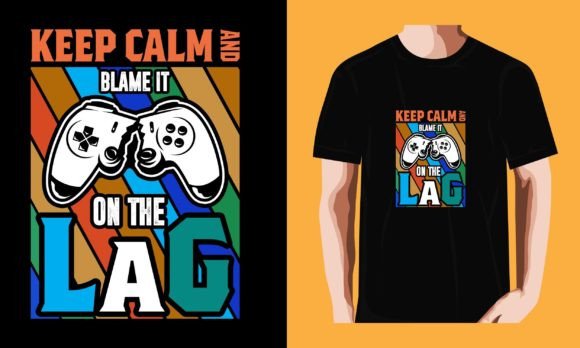
This is where the transition from an idea to a tangible item happens. The Keep Calm and Blame It on the Lag Gaming T-shirt Design captures this sentiment in a wearable, shareable format. It’s more than apparel; it’s a badge of belonging. For the adult gaming community, wearing such a design is an immediate signal to others. It says, "I understand the struggle, I’ve been there, and I choose to laugh about it." It fosters instant recognition and camaraderie at conventions, casual meetups, or even just in daily life.
The design’s versatility, offered in EPS, AI, and PNG files, is key to its broad application. These formats mean the core artwork isn’t locked to just T-shirts. The same clean, impactful design can be adapted seamlessly across different mediums without losing quality.
Practical Uses for the Design Files
- Merchandise for Small Businesses & Streamers: Individuals building a brand around gaming, tech, or humor can use these files to produce professional-quality T-shirts, mugs, or pillows for their audience. The EPS and AI files allow for easy color changes or minor adjustments to fit a specific brand palette.
- Personal Projects and Gifts: The PNG file is perfect for someone wanting to create a one-off decal for their laptop, a custom card for a gamer friend, or a unique poster for a game room. It’s a ready-to-use graphic.
- Backgrounds and Digital Illustrations: The high-resolution PNG can serve as a textured background in digital presentations, website banners, or overlay graphics in video content, adding a layer of niche, relatable culture to a project.
Understanding Your Audience and Their Needs
The resonance of Keep Calm and Blame It on the Lag changes depending on who is encountering it. A 25-year-old competitive esports enthusiast might see it as a precise, ironic statement about their professional challenges. A 45-year-old who enjoys casual weekend gaming with friends might appreciate it as a nostalgic nod to the shared frustrations of their group. Meanwhile, a non-gamer in their 30s working in IT might adopt it as an office joke about server issues.
This range means that products featuring the design—whether a shirt, a mug, or a bag—can serve different purposes. For one user, it’s a statement of identity. For another, it’s a perfect, thoughtful gift for a spouse or child who games. For a creative, it’s a versatile asset for their design work.
Common Considerations Before Using the Design
If you’re looking to apply this design, a few practical thoughts can help. First, consider the context. Is your use personal or commercial? For commercial use, ensuring you have the appropriate license or rights for the design files is crucial. Second, think about the medium. A detailed, multi-color design might work beautifully on a T-shirt but could lose impact when shrunk down for a small decal. The availability of vector files (EPS/AI) solves this, as they can be scaled infinitely without quality loss. Finally, reflect on the message. The phrase is humorous and lighthearted. It fits best in environments where a bit of tech-savvy, self-deprecating humor is appreciated.
The Strengths and Natural Limitations of the Concept
The primary strength of Keep Calm and Blame It on the Lag is its specific yet expansive relatability. It targets a very common, modern experience—digital frustration—with a wink. It doesn’t feel generic. However, its limitation is its niche origin. While its application has broadened, its deepest connection is still with gaming and tech cultures. In a setting completely removed from these worlds, the reference might be lost or feel obscure. It’s most powerful when the audience has the shared context to understand the joke.
Another strength of the ready-made design files is their professional readiness. They remove the barrier of needing a graphic designer to recreate the concept, saving time and resources. The potential limitation lies in customization. While the vector files allow for scaling and color adjustments, the core composition is fixed. If you need to radically alter the layout or integrate it deeply with another complex logo, additional design work might be needed.
Ultimately, Keep Calm and Blame It on the Lag serves as a useful tool—both as a mindset and a design asset. It helps people navigate the minor irritations of a connected world with humor, and it provides creators with a high-quality, culturally relevant graphic to express that idea on almost any surface they choose. It’s a small piece of digital culture made tangible, ready for a T-shirt, a mug, a background, or wherever a shared laugh about technological hiccups is needed.