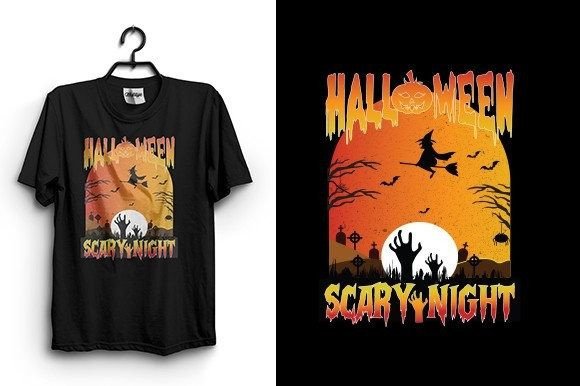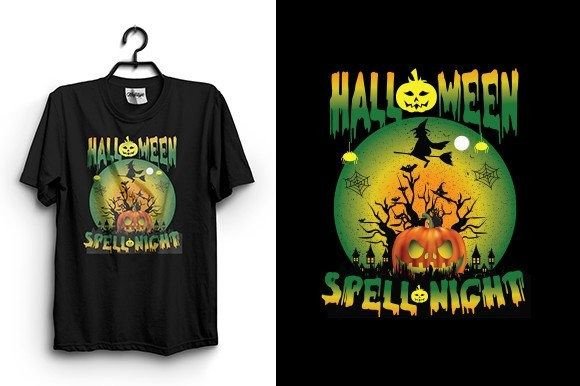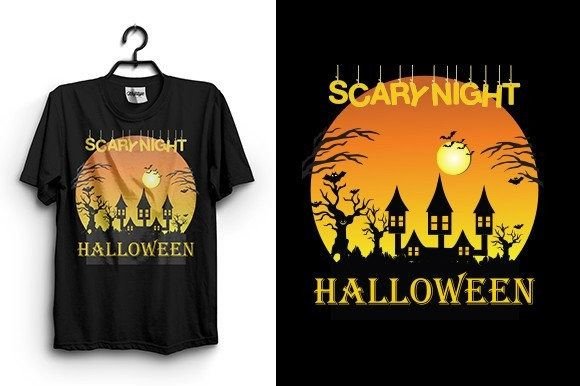
Elevate Your Merchandise with the Scary Night Halloween T-Shirt Design
For professionals and creators building their own apparel lines, the journey from concept to product involves navigating design, technical specifications, and production readiness. The Scary Night Halloween T-Shirt Design offers a concrete solution within this workflow, serving as a premium, adaptable asset that streamlines a key phase of the process. It moves you from creative ideation to having a production-ready file in hand, eliminating a common bottleneck.
Positioning the Design Asset in Your Creative or Business Workflow
Integrating a pre-made, high-quality design like this into your operations can occur at multiple stages. For an entrepreneur launching a seasonal Halloween collection, it acts as a foundational starting point, allowing rapid market entry without the overhead of custom illustration. For a marketing team needing branded merchandise for an event, it provides a ready-made, theme-appropriate visual that can be quickly approved and sent to print. Bloggers or content creators might use it to produce limited-run merch for their audience, turning a design into a tangible product with minimal technical hurdles.
The value lies in its role as a bridge. You are not just purchasing a static image; you are acquiring a flexible toolkit that interacts directly with the next steps in your workflow: the print-on-demand platform, the local screen printer, or your own production software. Its compatibility and organization are engineered for this transition.
Core Specifications and Production Readiness
Understanding the technical deliverables is crucial for practical implementation. The design provides a high-quality 4500×5400 px file alongside 100 vector T-shirt design elements and multiple file formats. This suite of assets addresses different needs within a production pipeline.
The vector files (Ai CC, EPS CC, SVG) are essential for professional editing and scaling. Whether you need to adjust color schemes—switching between black, white, or color versions—integrate additional text, or resize the artwork for different garment types, these formats allow modification without any loss of quality. This ensures brand consistency across a product range. The provided 300dpi image files, like the PNG, are typically the direct upload files required by many print services, meaning you can often skip the editing step entirely if the base design meets your needs.
The fact that all files are delivered at 300dpi and as premium quality designs is a direct quality control measure. It prevents the common workflow interruption of receiving a low-resolution file that is unfit for print, forcing you to backtrack and source a new asset. Here, the preparation is done for you.
Practical Integration and Workflow Examples
Consider a small business owner running a niche online store. Their process might be: concept seasonal campaign, select designs, list products, fulfill orders. Upon downloading the Scary Night Halloween T-Shirt Design, the organized ZIP file containing all assets is immediately placed into a designated “Seasonal Assets - Halloween” folder in their project management system. They review the PNG file, confirm it matches their store aesthetic, and upload it directly to their integrated print-on-demand service. The product is live within hours, not weeks.
For a freelance graphic designer working with a client who wants a quick Halloween shirt, the workflow integrates differently. The designer downloads the file, opens the AI version in Illustrator, and efficiently customizes it by adding the client’s logo or altering the color palette to match the client’s brand guidelines. They then deliver the finished, print-ready 300dpi PNG to the client, having provided a custom service built on a robust, editable foundation. This improves efficiency for the freelancer and reduces cost and risk for the client.
Organization and Long-Term Asset Management
A key feature for sustained use is that the files are well organized and compressed in one ZIP file. This supports efficient digital asset management. For creators who accumulate many design assets over time, a well-packaged, clearly labeled set of files is easier to archive, retrieve, and re-use for future Halloween seasons or derivative projects. This contributes to long-term workflow efficiency, turning a one-time purchase into a reusable component in your creative inventory.
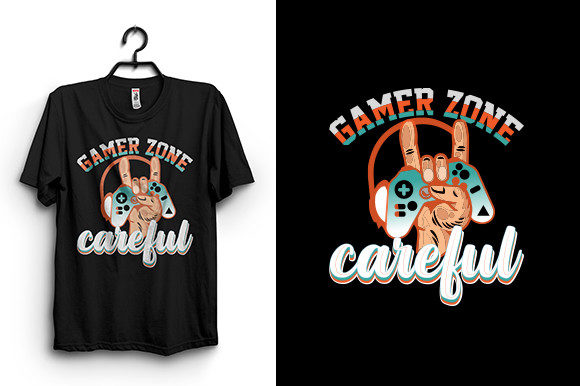
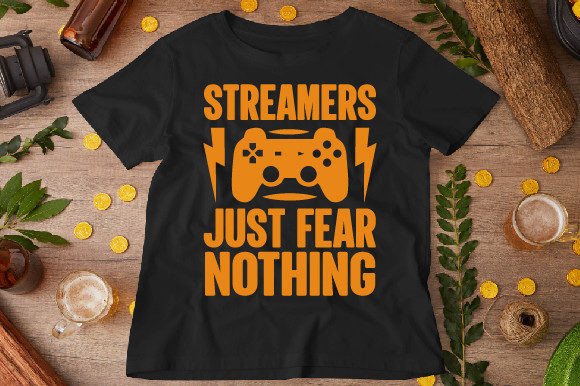
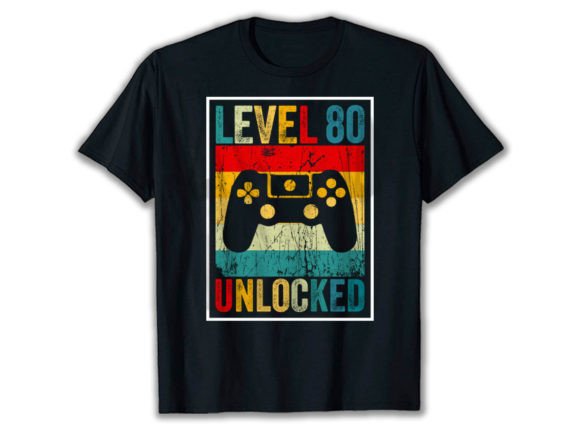
The inclusion of a GAMING T-Shirt design style within this package also hints at its versatility. It might fit not only a pure Halloween theme but also the aesthetic of a gaming community event happening in October. This allows you to apply the asset across slightly different use cases, maximizing its value.
From Download to Implementation
The final step in the process is the seamless handoff to production. The promise that you can easily download it and edit it and use it in your print item without any problem is the culmination of its design. In practice, this means after your download, your next actions are straightforward: unzip the folder, select the appropriate format for your intended action (edit or direct upload), and proceed. There is no intermediary step of converting file types, upscaling resolution, or deciphering disorganized layers.
For the productivity-minded user, this clarity and completeness is the core benefit. It removes uncertainty and technical barriers, allowing you to focus your effort on the business and creative decisions that matter—marketing the product, choosing the garment type, setting the price—rather than troubleshooting design files. It turns a complex, multi-step task into a more linear and controlled execution path.
By providing a comprehensive, editable, and quality-guaranteed asset, the Scary Night Halloween T-Shirt Design integrates as a reliable component in your merchandise creation workflow. It functions as both a starting point for new ventures and an acceleration tool for established processes, enabling professionals and creators to execute their projects with greater confidence and reduced operational friction.